About Bending of Beam Apparatus
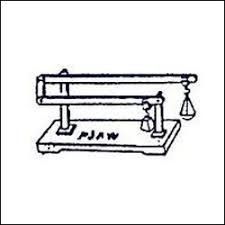
Bendingof Beam Apparatus
It consistsof a brass beam 9 mm square one meter long resting on the two knife edges fixedon heavy stands at the bases of which are fitted levelling screws. A cantralknife edge with hanger rests on the beam at the top of which is provided a pin. Complete with a cast ironslotted weights set having two weights of 1 Kg. two weights of 1 Kg and ahanger of 1 Kg.
Precision Measurement for Beam DeflectionEquipped with a high-accuracy dial gauge (least count of 0.01 mm), the apparatus facilitates precise measurement of beam deflection under varied loading scenarios. This ensures accurate experimental results when analyzing material properties and mechanical behaviors during bending tests.
Versatile Experimental ConfigurationsThe apparatus features adjustable beam span (500-800 mm), interchangeable beams of different materials, and supports for both knife-edge and roller setups. It allows users to conduct simply supported, cantilever, and fixed beam experiments, all within a stable and safe platform.
Durable Construction and Ease of UseMade from mild steel and stainless steel, with a powder-coated surface for enhanced durability and rust resistance, the stand ensures longevity and reliability. Anti-skid feet and a comprehensive manual streamline setup, ensuring smooth usage for instructors and students alike.
FAQ's of Bending of Beam Apparatus:
Q: How is deflection in the beam measured using this apparatus?
A: Deflection is measured using the included dial gauge, which has a least count of 0.01 mm and is mounted at the midpoint or relevant location of the beam. As weights are applied, the dial gauge accurately records the resulting deflection.
Q: What types of experiments can be performed with this beam bending apparatus?
A: You can use the apparatus for simply supported, cantilever, and fixed beam experiments. These tests help demonstrate and analyze bending stress, deflection, and material behavior under different loading conditions.
Q: Where is this apparatus typically used?
A: It is used in educational settings such as engineering laboratories, universities, polytechnic institutes, and technical training centers, primarily for mechanics of solids and civil or mechanical engineering studies.
Q: What is the process of setting up the beam for testing?
A: First, select the desired test beam and span (500-800 mm), then adjust the support type (knife-edge or roller). Place the beam and install the dial gauge at the required location. Attach the loading hangers, add calibrated weights gradually, and record the deflection readings.
Q: Can users analyze different materials with this apparatus?
A: Yes, the apparatus comes with a set of interchangeable test beams of various materials and cross-sections, enabling comparative analysis of material strength and elasticity under bending loads.
Q: What are the benefits of using dead weights and manual operation?
A: Manual load application via dead weights ensures accurate, controlled force without the need for electrical power. This enhances safety, reliability, and allows experiments to focus on fundamental mechanical principles.
Q: What accessories are included with the beam bending apparatus?
A: Included accessories are standardized calibrated weights (5 x 1 kg, 5 x 0.5 kg, 5 x 0.2 kg), graduated scale, loading hangers, a set of test beams in various materials and cross-sections, and a comprehensive instruction manual for user guidance.








 Send Inquiry


 Send Inquiry


 English
 Spanish
 French
 German
 Italian
 Chinese (Simplified)
 Japanese
 Korean
 Arabic
 Portuguese